
Two slots can display very different numbers next to their reels. One might describe fixed lines; another might advertise thousands of ways; a third might use “pay anywhere”. These are descriptions of scoring systems. Comparing their numbers without understanding what is counted can be misleading.
Four NextSpin titles in OCWIN’s catalogue make useful examples. Buffalo King, Mahjong Phoenix and Big Cai Shen use ways terminology. Candy Bonanza Xmas uses a pay-anywhere description. The distinctions below explain the vocabulary without ranking the games or predicting results.
Paylines describe a path
A payline is a defined route through symbol positions. It can be straight or patterned. The important idea is that position matters along that route: matching symbols elsewhere on the screen do not automatically satisfy the same line.
Line count and symbol value answer separate questions. A count of lines does not reveal how common a symbol is, how many matching symbols are needed, or the amount associated with a qualifying combination. Those details belong to a game’s symbol table.
Ways describe combinations of positions
Ways-based scoring considers qualifying symbol combinations across reels. To see the arithmetic, imagine three reels with three eligible positions each. Multiplying 3 × 3 × 3 gives 27 possible positional routes. This is a deliberately simplified example, not a description of any game’s layout or probability model.
Changing the number of positions changes that route count. It does not, by itself, reveal the chance of a qualifying result. That would also require information about symbol distribution and the exact rules.
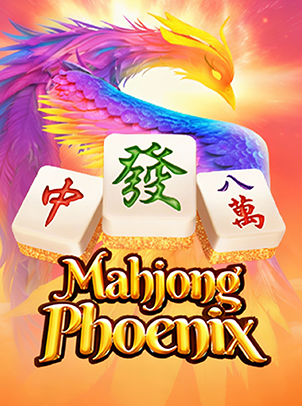
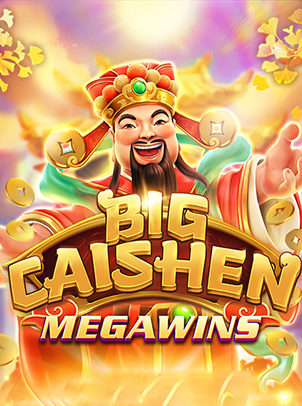
NextSpin describes Buffalo King as 1,024 ways and Mahjong Phoenix as 2,000 ways. Big Cai Shen has a published range of 2,025 to 32,400 ways. These labels distinguish formats; they do not establish a hierarchy of personal outcomes.
Pay-anywhere changes the role of placement
With pay-anywhere terminology, qualifying symbols are counted without requiring a conventional line. The exact rules still determine which symbols count and the necessary quantity.
Candy Bonanza Xmas is NextSpin’s example in this article. Its public feature description confirms the positioning concept, but does not provide a complete symbol-count table. “Anywhere” should therefore never be translated into “any result wins”.
The four examples at a glance
| NextSpin title | Published scoring format | What the label does not tell you |
|---|---|---|
| Buffalo King | 1,024 ways | The probability of a jackpot tier |
| Mahjong Phoenix | 2,000 ways | The chance of a feature trigger |
| Big Cai Shen | 2,025–32,400 ways | A predicted payout or winning frequency |
| Candy Bonanza Xmas | Pay-anywhere symbols | The full set of qualifying symbol counts |
RTP answers a different question
Return to player describes the theoretical proportion of total stakes returned across a large number of rounds. It is not the chance that a particular round wins, or a promise that a deposit will be returned. The Gambling Commission’s explanation of RTP makes the distinction between long-run averages and individual sessions clear.
A scoring format and an RTP percentage therefore measure different things. Neither becomes a prediction simply because it is displayed prominently. Our existing articles on RTP and volatility cover the other common labels.
Where these examples come from
The game identities were checked against OCWIN’s public catalogue on 6 October 2026. Format descriptions come from NextSpin’s product pages for Buffalo King, Mahjong Phoenix, Big CaiShen and Candy Bonanza Xmas. The mathematical examples are explanatory illustrations.
These articles document game terminology, not a method for producing a profit. For information about taking a break, setting limits and finding help, see Responsible Gambling.
Common questions
Does a higher ways count guarantee better results?
No. A ways count describes scoring routes. It does not supply symbol probabilities, payment values or a prediction of individual results.
Are pay-anywhere and cluster scoring interchangeable terms?
No. A cluster description may require neighbouring positions, while pay-anywhere refers to symbols contributing without a conventional line. The exact game rules define the conditions.
Is RTP the percentage of rounds that win?
No. It is a theoretical monetary return measure across many rounds, not a winning-round frequency or a personal guarantee.